 Funks Swabbie
On Ikaria’s eastern shore a woman with silver hair sweeps the small stone courtyard outside her house, and a boy on a bicycle rides past without a worry. In the afternoon the neighborhood will fold itself into a slow rhythm: a long lunch, a cup of wine, a nap, then the porch conversations that stretch into dusk. Passersby sometimes laugh at nothing more than a shared memory. The island’s ordinary pace is the kind that, in other places, would be called extraordinary — because in Ikaria, ordinary seems to be a recipe for very long life.
Ikaria is small: a scatter of whitewashed houses, olive groves and rocky hills rising from the Aegean. It is not built for speed. Its roads curve, its markets open late, and its food is humble. But over decades researchers and journalists have noticed the same thing — Ikaria’s people live differently, and they live longer. The island joined the roster of so-called “Blue Zones,” regions where unusually high numbers of people reach their 90s and 100s while remaining active and socially engaged. That claim rests on both ethnographic observation and formal research: epidemiologists who studied Ikaria documented lower rates of heart disease and dementia, and an elevated prevalence of long life compared with other parts of Greece and much of the developed world.
A life paced to a different clock
If you visit Ikaria you notice rhythm more than spectacle. Shops close for long midday breaks. Fields are worked by hand and visited by families across generations. People move naturally — walking up terraces, carrying baskets, living in houses without elevators. That “natural movement” is one of the recurring features researchers highlight in Blue Zone communities: physical activity integrated into daily life rather than regimented gym sessions. It is steady, habit-shaped motion — not performance.
One of the small but striking cultural markers on Ikaria is the siesta. Long midday rests are common; people lie down for a bit after lunch, often on a bench or in the shade. Studies suggest that such naps are far from idle indulgence. Observational research has found associations between regular napping and reduced risk of heart disease — a link some researchers attribute to stress reduction and better cardiovascular recovery. For Ikarians, the nap is not a medical prescription but a social norm that eases daily stress and preserves energy for the evening’s life.
What people eat (and what they don’t)
Ikaria’s diet reads like a quiet paean to place. It is a Mediterranean diet in local dialect: a cupboard of legumes, wild greens, beans and potatoes; olive oil used generously; fish sometimes, meat rarely; honey, herbs, and the odd piece of locally made cheese. Meals are rarely about calories and more often about plants, fiber and simple preparation. People eat from the land; they forage thyme and herbs, they pick figs and grapes, they preserve what the season offers. That way of eating delivers a high-fiber, low-processed diet rich in antioxidants — which epidemiologists note as a probable factor in lower rates of cardiovascular disease and certain cancers on the island.
Alcohol appears in moderation and in social contexts: a glass of red wine during a long lunch, for example. Traditional cooking methods and portion sizes, along with regular physical activity, limit obesity and metabolic disease. But diet alone does not explain the pattern; the Ikarian table is bundled into a broader cultural web that includes daily movement, sleep patterns, and community customs.
Community as a biological force
Longevity on Ikaria also has a social face. People live in extended family clusters, neighbors drop by without ceremony, and festivals — often with music and dancing — punctuate the year. Elderly residents remain embedded in family life and are rarely isolated. This dense social fabric is not a vanity metric; it correlates with better mental health, lower stress, and measurable physiological benefits. Social isolation, by contrast, is a known risk factor for early death across many large studies. In Ikaria, belonging is both a comfort and a kind of resilience.
Researchers who interview Ikarians emphasize humility about these patterns. People on the island do not claim to have discovered the secret to eternal life; they describe small routines that stack up over decades: regular communal meals, daily movement, short naps, and low-stress expectations. The rhythm of community and the low social pressure to “do more” can be protective against chronic stress — arguably one of the most pervasive health risks of modern life.
Medicine, myth and measurable outcomes
The academic interest in Ikaria turned empirical in the early 2000s, when demographers and epidemiologists began publishing studies comparing the island’s mortality and disease statistics with the rest of Greece and with samples elsewhere. One often-cited study reported that Ikarians suffered about 20 percent less cancer and half the rate of heart disease than comparable populations; additionally, dementia rates appeared unusually low. The numbers were not gargantuan outliers but clear enough to merit further study.
Still, careful researchers insist on limits. Observational studies can show correlation but not strict causation. Demographic records in remote regions can suffer from errors in birth records and migration data. And the label “Blue Zone,” popularized by travel writers and consultants, carries both useful attention and risks: oversimplification and commercialization can cloud the underlying science. Recent journalistic and academic critiques have pointed out methodological issues in some longevity claims and warned against treating Blue Zone lists as immutable truth. Those critiques matter: they temper the romanticism and push us toward better data and clearer explanations.
Small interventions, big returns
If Ikaria has taught researchers anything practical, it is that longevity may be more about small, sustained exposures than dramatic interventions. The Ikarian life is full of everyday protective behaviors:
- Dietary pattern: A plant-forward, whole-foods diet centered on beans, vegetables and olive oil rather than processed items.
- Integrated physical activity: Daily movement incorporated into living — gardening, walking, climbing.
- Regular rest and low chronic stress: Midday naps and a culture that reduces time pressure.
- Strong social networks: Frequent social contact, intergenerational households, and community rituals.
- Purpose and routine: Older adults on Ikaria often remain active within family and village life, with roles that confer meaning.
Each of these elements is not unique to Ikaria. They are visible — in different mixes and to different degrees — in Sardinia, Okinawa, Nicoya and Loma Linda, the other regions associated with long-lived communities. Together they form a pattern: longevity as emergent property, not single cause.
Scientific interest in Blue Zones has produced both confirmatory studies and sober caveats. Peer-reviewed research such as the Ikaria study in PubMed Central analyzed lifestyle factors and found associations with lower rates of chronic disease, but it also called for more rigorous longitudinal research to establish causality. Meanwhile, critical voices in the academic world and the press have pushed back on the Blue Zone brand, noting selective data, possible record-keeping errors, and demographic shifts that may erode the edge of longevity in some zones. The responsible takeaway is not binary: Ikaria’s population shows promising health statistics, but the phenomenon must be understood as complex, multi-factorial, and context-dependent.
A day in the life, through an Ikarian lens
Consider the life of a hypothetical Ikarian named Eleni. She wakes before sunrise, kneads dough and checks the herbs growing in the yard. In the morning she visits a neighbor and exchanges news. She tends a small plot — nothing mechanized, just hands-on work — and later meets a group for lunch where beans and greens are served alongside bread and a small glass of wine. After lunch she rests. In the late afternoon there is music at the square or a cousin’s house to visit; in the evening there is lively conversation and, sometimes, hours of dance. Her life is not free of hardship: she has outlived wars, poor harvests, and years of hard labor. Yet those same hardships have produced a social life that rewards contribution and discourages isolation. Over decades, these modest habits compile into measurable advantages at the population level.
When researchers interview centenarians on the island, many answer the question “what is your secret?” with humility. They point to food, to work, to the sea, but more often they point to routine and to each other. The narrative of long life is rarely an individual boast; it is a communal narrative that credits neighborliness as much as it credits diet.
The most practical question for readers is whether Ikaria’s pattern can be translated into other places. Urban planners and public-health officials have tried to import elements of Blue Zone thinking into cities and towns — promoting walkability, social programs, community gardens, and time for rest. Some interventions appear promising: small redesigns that encourage walking or community events can lower isolation and increase activity. But transplanting an entire lifestyle is another matter. Ikaria’s advantages are embedded in geography, history, and a slow cultural tempo that has been forged over generations.
Moreover, the Blue Zone concept has become something of a brand. Dan Buettner’s popularization brought useful attention to longevity research, but it also invited commodification. Critics remind us that genuine public health requires rigorous, population-wide policies and not only inspirational stories. Still, the stories matter: they make abstract epidemiology visible and suggest realistic, low-cost lifestyle changes that public health can encourage.
If Ikaria’s life feels distant, there are modest, evidence-supported practices readers can try that align with the island’s pattern:
- Build movement into the day: walk, garden, take stairs, and reduce hours spent sitting.
- Prioritize plants: increase beans, vegetables, whole grains, nuts and olive oil; treat meat as an occasional complement.
- Protect sleep and schedule rest: consider short daytime rests when possible and avoid chronic sleep deprivation.
- Cultivate social ties: invest in family time, neighborly visits or small local groups that meet regularly.
- Keep purpose: find small roles — volunteering, mentoring, gardening — that give structure and meaning.
None of these is a guarantee. Longevity is shaped by genetics, environment, access to healthcare and chance. But the Ikarian pattern suggests that steady, socially embedded habits can shift population risk in meaningful ways.
Ikaria’s story is not a fable of immortality; it is a reminder that societies can structure daily life in ways that reduce chronic stress and disease. The island does not hold a single secret. Instead, it offers an assemblage of practices — food, movement, rest, community — that together produce measurable advantages for health and longevity. Researchers continue to sort which elements are most consequential, and public-health practitioners are figuring out how to scale useful practices without erasing the social textures that make them meaningful.
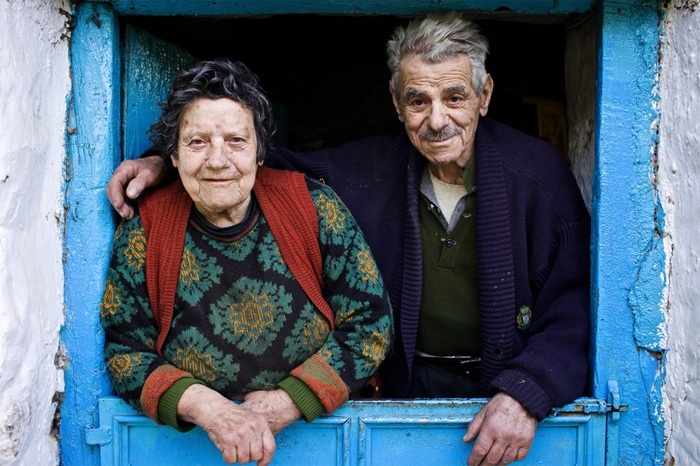
For the visitor who watches an old couple sharing water from a plastic bottle on a warm afternoon, the lesson is simple and unvarnished: long life can be built from ordinary things repeated daily and shared freely. Ikaria’s longevity nudges the question of public health away from miracle cures and toward everyday design: how do we structure school, work, neighborhoods and family life so that healthy choices are not heroic but habitual? That is the question the island raises — and it is one worth answering.


 Funks Swabbie