 Funks Swabbie
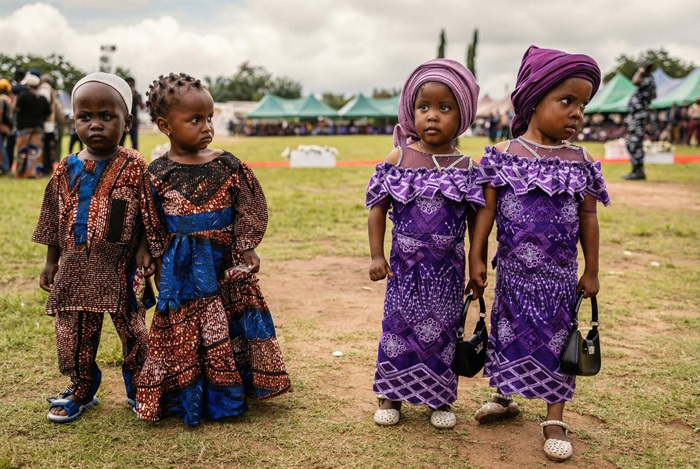
There is a place in Africa where twins are so common, it has been dubbed ‘the twins capital of the world.’ Welcome to Igbo-Ora, a town 135 kilometres north of Lagos in Oyo state, Nigeria. The twon is known for having many twins. So many that locals call it the “twin capital of the world.”
This is a careful look at how a quiet Yoruba town ended up with a global reputation, what science and local memory say about the phenomenon, and why the story matters beyond a headline. The account moves between hospital records and household kitchens, between scientific journals and wooden carvings called èrè ìbejì that mark the spiritual weight of twins for the Yoruba people. It is not a mystery solved; it is a woven narrative of culture, chance and inquiry.
A place where twins are ordinary
Walk through Igbo-Ora and the ordinary rhythm of life repeats itself twice. On market days it is common to see women carrying two babies the same age, pairs of children in matching clothes, and families who measure kinship in mirror images. The global average twinning rate is roughly 12 sets of twins per 1,000 births. In Igbo-Ora, decades of hospital records and community studies report figures as high as 45 sets per 1,000 births — roughly three to four times the global norm. That discrepancy is what propelled the town from local curiosity to subject of international reporting and scientific interest.
Every October the town turns the statistic into celebration. The Igbo-Ora World Twins Festival draws hundreds of pairs, performers and visitors who come for the spectacle and the family reunions. Twins walk in parades and are crowned in ceremonies that are equal parts carnival and ritual. Local organizers have even aimed for a world record for the largest gathering of twins. These events keep the town’s twin identity visible to outsiders and reinforce local pride.
Two main explanations: genes and food
There are two broad explanations people offer for Igbo-Ora’s twin abundance: genetics and diet. The first is straightforward: some populations simply carry a higher incidence of dizygotic (fraternal) twinning genes. If these genes are common in a relatively endogamous population — where people tend to marry within the same community — they can concentrate over generations. Several scientific papers and demographic records point to a hereditary component among the Yoruba as a plausible factor.
The second explanation is rooted in local knowledge: food. Many residents insist that traditional diets — in particular a soup made from okra leaves (called ilasa in some dialects), yams and other local staples — somehow encourage multiple ovulations, the biological process that can produce fraternal twins. That idea has a powerful cultural logic: food is shared, recipes are local, and mothers speak of what they ate during conception as meaningfully different from the standard diet elsewhere. Popular media accounts and local interviews often highlight the role of okra stew and yam meals in oral explanations.
Scientists have tested both ideas. A number of studies have documented the high rate of dizygotic twinning in Igbo-Ora and across Yoruba communities in southwest Nigeria. But to date no conclusive biochemical link has been proven between specific local foods and increased twin rates. Epidemiologists and fertility specialists caution that diet alone is unlikely to account for the scale observed, though they do not dismiss diet as a potential contributing factor. Genetics, small-population dynamics and even chance remain plausible alternatives or cofactors. The truth appears to be that culture and biology are entangled here, and none of the current hypotheses explains all observed patterns.
Science goes to the town
Researchers from Nigerian universities and international collaborators have tried to peel back the layers. Hospital records have made the town an epidemiological case study: researchers use birth registries to estimate twinning rates and compare them to regional and global figures. Qualitative research — interviews with mothers, midwives and elders — reveals a taxonomy of explanations from “the food” to “our ancestors’ blessing.” One published qualitative study that surveyed community perceptions emphasized that a blend of belief, diet and heredity shapes how residents make sense of the pattern.
Despite the interest, science has not delivered a single definitive paper that identifies a clear causal mechanism. Part of the difficulty is practical: a long list of confounders (maternal age, socioeconomic factors, birth recording accuracy, migrations in and out of the town) complicates large-scale statistical claims. Part of the problem is the nature of twinning itself: dizygotic twinning rates can be influenced by many small factors that interact over generations. For now, the town remains an open field for further study, and it has become a resource where global researchers test new models of fertility and genetics.
Culture, belief and twincraft
If science is still refining its models, the cultural lens is already clear. In Yoruba cosmology, twins occupy an elevated, complicated status. Twins are often seen as bearers of good fortune and special protection. There is a long artistic tradition — the èrè ìbejì wooden figurines — used historically to house the spirit of a deceased twin and to continue a ritual bond between the living and the dead. Because twin births used to be riskier for infants, spiritual practices emerged to protect and honor them; those practices evolved into a broader cultural repertoire that now celebrates twinship as a site of blessing. The cultural practice is a living archive that shows how biology and belief co-evolved in this place.
The social implications are practical as well. Twins can raise issues of inheritance, naming and schooling. Families with twins are sometimes perceived as exceptionally fertile and therefore socially desirable in marriage markets. Local business and tourism benefit from the identity: twin festivals bring visitors and journalists, and craft traditions tied to twins find new markets. That commercial dimension can complicate the spiritual one, but it also funds local pride and ensures the continuity of the festival culture.
Personal stories that make the phenomenon human
Numbers tell one part of the story, but the human narratives are what linger. Grandmothers recall helping mothers bathe newborn pairs. Midwives tell of the careful logistics of delivering two babies at once. Young twins, interviewed at festivals and community events, speak of being treated as a pair in clothing and schooling, of rivalries and deep companionship in the same breath. Those stories give texture to a statistical anomaly; they show how local institutions adapt to recurring realities.
A striking detail that emerges from multiple family accounts: in some households, twinship is not simply biological fact but a marker of lineage — a way families narrate survival and continuity after wars, epidemics and personal loss. In that sense twins are woven into the moral economy of family histories.
International reporting has sometimes simplified the picture: headlines that read “village where everyone has a twin” exaggerate the everyday reality and can caricature the town as a biological curiosity. Sensational framing risks treating people as specimens rather than citizens. More responsible reporting combines measurements and context — the medical records, the interviews, the ritual practices — and resists quick answers.
Another danger is that simple narratives — “they eat okra, that’s why” — can obscure structural factors: access to healthcare, demographic change, and migrations that alter genetic pools. Scientists and journalists alike must balance the allure of an elegant single explanation with the messy, multicausal reality.
What the twins of Igbo-Ora tell the world
Why should a global reader care about a town’s twin rate? The importance is twofold.
First, Igbo-Ora is a reminder that human biology does not exist apart from culture. Foods, rituals and beliefs shape reproductive choices and social responses. When geneticists study twinning they need to account for local practices that influence reporting and reproductive behavior. The town offers a live laboratory for interdisciplinary work that connects anthropology, epidemiology and public health.
Second, the story is a corrective to a flattened view of development. Rather than seeing the town solely through the lens of deprivation or exoticism, Igbo-Ora shows how communities create meaning and value around natural phenomena. The twin festival, the artisan traditions for twins, and the pride of families all point to social resilience. In many ways, the town converts a demographic oddity into cultural capital.
At the center of the tale sits an open scientific question. Is Igbo-Ora’s twinning rate primarily genetic, primarily environmental, or a unique combination? Each possibility matters:
If genetics is dominant, the case can teach population geneticists about how allele frequencies concentrate and manifest in small communities.
If diet or environment contributes measurably, public health and nutrition science will need to reframe how seemingly modest dietary patterns can have long-term demographic effects.
If the truth is multifactorial, then Igbo-Ora will remain a model of complexity — a place where simple cause-and-effect gives way to historical contingency and cultural practice.
For now, a series of careful, ethically conducted studies would be the best next step: long-term demographic tracking, biochemical analysis of dietary components, and genetic surveys that respect community consent. The town has hosted researchers before; with proper engagement and benefits for residents, future research can deepen understanding without reducing people to data points.


 Funks Swabbie