 Funks Swabbie
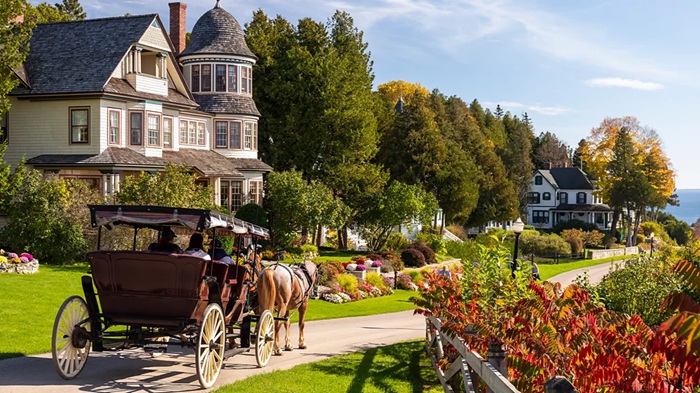
There is a place in the United States of America where cars are not allowed. This place replaced cars and motorbikes with horses and carriages centuries ago, and it has remained till date. Instead of engines, the island answers with hoofbeats and bicycle chains. Instead of exhaust and horns, it greets you with the clack of carriage wheels on wood plank and the warm, sugary air from fudge shops. This is Mackinac Island, Michigan, the American town that outlawed automobiles more than a century ago and has kept that rule ever since.
How it all began
In the late 1800s horse-drawn carriages, foot traffic, and a modest ferry service were normal on Mackinac Island. The island was already famous for its natural limestone arches and the British-built Fort Mackinac that watched the harbor. Then a new thing began to appear on roads around the country. Inventors called it the horseless carriage. On Mackinac Island, the idea of a self-propelled vehicle created fear as much as curiosity. The island’s economy relied on horses; carriage drivers ferried visitors between docks, hotels, and the fort. Horses were skittish when a motor backfired or shook the air in an unfamiliar way.
Local carriage men pressed the village council to act. The council sided with tradition and public safety and banned “horseless carriages” in 1898. A follow-up step nearly as important came a few years later when the Mackinac Island State Park Commission extended the ban to the park lands. Those two acts made the motor ban an institutional rule and not merely a local habit. The practical result is that Mackinac Island has been effectively car-free for well over a century.
That story is useful because it is not about romantic nostalgia only. It is about economic interests, legal authority, and choices a place made to preserve a working pattern. The carriage men won more than charm. They protected a livelihood and a rhythm of life they believed engines would ruin.
A town shaped by hooves and pedals
Walk Main Street and the differences are obvious. Instead of parked cars you see rows of rental bicycles leaning against railings and stalls advertising carriage tours. Horse-drawn taxis wait near the ferry docks. You will also notice the Grand Hotel, whose famously long porch stretches like a stage across the harbor. That hotel, its dress code, its afternoon teas, and its demand for a refined pace of life fit naturally into an island that has denied the rush of modern traffic.
Mackinac Island’s transportation ecosystem is simple and robust. Residents and visitors walk, ride bicycles, hire horse-drawn carriages, or use specially permitted emergency and service vehicles. The island’s loop road, M-185, circles the shoreline for about eight miles and holds the distinction of being the only state highway in Michigan closed to motor vehicles. Biking the loop is a favorite activity. Along the way riders see Arch Rock, British Landing, and the bluff above Fort Mackinac.
The presence of horses is everywhere. The island operates a network of carriage services, stable yards, and even museums devoted to antique carriages. The horses are working animals. They require feed, shoeing, veterinary care, and rest. The island’s hospitality industry, its carriage owners, and the state park share an interest in maintaining both the animals’ welfare and the visitor experience. The rules that limit car traffic also create a market for services that would not exist otherwise.
How the ban works in practice
The ban is not mystical. It is a set of municipal and state rules enforced with permits and common sense. Emergency vehicles and some service vehicles are permitted. Government and park staff operate small, specialized autos when safety or infrastructure work demands them. The island even has a small airport for medevac and occasional supply runs. For daily life, however, the streets and roads remain the domain of horses, bicycles, and people on foot.
Occasionally the rule becomes a national story. High-profile visits have tested the island’s conventions. In 2019, the arrival of a U.S. vice president with a motorcade drew attention and local debate about exceptions and respect for tradition. The reaction showed that the automobile ban has a symbolic value that matters to residents and to the island’s brand.
The economic logic of a car-free town
On the face of it, banning cars sounds like a tourism gimmick. But the island’s economy shows a deeper logic. Mackinac Island draws hundreds of thousands of visitors each year in a season that concentrates from late spring through early fall. That visitation supports hotels, restaurants, small retail shops, museums, and carriage companies. The absence of cars shapes the kinds of businesses that can flourish. Artisans and fudge-makers set up on Main Street. Bike rental shops line the harbor. Carriage operators run tours and private transfers. Even Doud’s Market, a family-owned grocery anchored on the island for generations, built a successful delivery model that moves goods by horse.
The result is a unique cluster economy. Certain skills and services are rewarded: carriage driving, equine care, bike repair, historic preservation, and a hospitality style that values slow, curated experiences. Those jobs are not high-tech. That is the point. Mackinac Island monetizes an experience that car-filled resorts cannot replicate.
Daily life for residents
About 400 to 500 people call Mackinac Island home year round depending on the month. For them the car ban is ordinary. Children walk to school. Deliveries arrive by ferry and are distributed by horse or pushed by cart. Snow removal in winter uses machines where appropriate but the island also relies on seasonal rhythms that reduce traffic. Residents who work off-island commute by ferry to the mainland. Life on Mackinac Island requires planning and patience, but it rewards a quieter pace and a close-knit community.
That said, the ban also creates logistical challenges. Building repairs, emergency services, and waste removal all require coordination with ferry schedules and careful use of permitted vehicles. For islanders, those inconveniences are manageable trade-offs against the benefits of a quieter town and a stable tourist economy.
Horses, ethics, and public debate
Relying on horses invites scrutiny. Animal welfare advocates ask questions about working hours, conditions, veterinary care, and the road surfaces horses must work on. The island and its carriage operators respond with rules, veterinary oversight, and investments in rest facilities. There are regular inspections and a public discourse about improving conditions. The debate matters because it ties the island’s brand to how it treats the animals that make the place possible.
Mackinac Island has responded to criticism with transparency and incremental improvements. Owners point out that the horses are valuable animals with careers and that the economic model keeps them well cared for. Government agencies and park staff have incentives to maintain both safety and reputation.
A visitor’s day without a car
Imagine you arrive on a bright June morning. You step off the ferry and feel the sun on your face. You rent a bike for the day and ride the shoreline loop. You stop at Arch Rock and walk a short trail to stand above the water. You pedal past Fort Mackinac, where actors in period uniforms demonstrate cannon firing. Back downtown you trade a return visit to a fudge shop and settle on a carriage tour that threads through the interior roads. The driver narrates the island’s layered history. On the porch of the Grand Hotel you sip afternoon tea and watch the world go by. At night the harbor glitters under low lights and the lack of engine hum makes the stars more audible. That itinerary is a literal and symbolic description of why people come.
No system is absolute. Weather, infrastructure failure, medical emergencies, and national security needs sometimes require exceptions. These events reveal the practical reasons for allowing limited motorized use. But exceptions tend to strengthen the rule rather than weaken it. They show the community that the ban is a deliberate choice, not an impractical law. The occasional motorcade or ambulatory vehicle only underscores how unusual cars are on the island and how protective residents are of that unusualness.
Another surprise is how modern services adapt to the ban. Grocery stores developed horse-delivery logistics. Suppliers plan multi-day shipments by ferry. The island now has WiFi and modern plumbing in hotels. That blend of antique transport and modern amenities creates a safe, comfortable experience without the clutter of traffic.
The cultural capital of being old-fashioned
Mackinac Island’s prohibition of cars is more than a regulatory quirk. It is a form of cultural capital. The ban underpins a consistent brand message: this island is a refuge from the speed of modern life. It sells an experience. People do not only visit to see Arch Rock or Fort Mackinac. They visit to live for a day in a social arrangement that no longer exists in most of the world. That arrangement is valuable and scarce. Scarcity in tourism often translates into higher willingness to pay. That explains why the island’s hospitality market can command premium rates during peak season.
On a map Mackinac Island is a small dot between Michigan’s peninsulas. Up close it is a place with a full life. The horses rest on their hay. Carriage drivers remember names of families who have visited for decades. The fudge shops keep churning out samples by the dozen. Visitors leave with photos and a quieter rhythm in their steps. They also carry back a reminder that we choose the shape of the towns we inhabit. Mackinac Island chose to turn its back on the automobile. For more than one hundred years that choice has defined a community, protected a set of livelihoods, and crafted a visitor experience unlike any other in the United States.


 Funks Swabbie