 Funks Swabbie
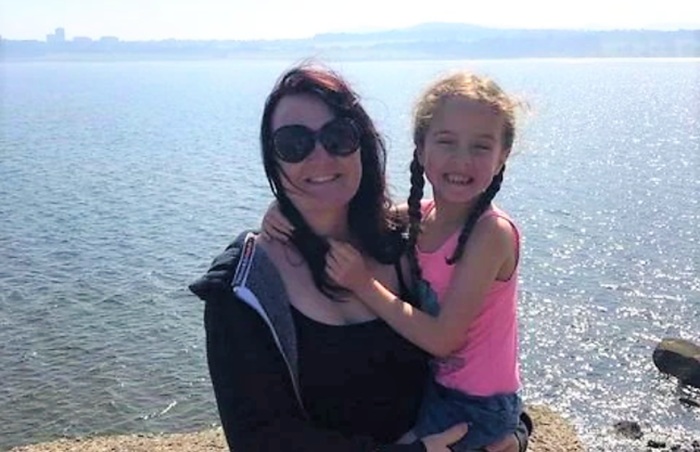
Tanya Paxton was amazed when her two-year-old daughter, Seinna, read aloud the word ‘Lift’ mounted above the elevator doors in a shopping center.
A sign most adults barely notice.
At just two years old, she looked up, paused, and read the word aloud. “Lift.”
Her mother, Tanya Paxton, stopped walking. At first, Paxton assumed she had misheard. Toddlers repeat sounds all the time. But then it happened again. And again. Sienna began reading words on signs, labels, and book covers with no prompting and no rehearsal. She was not reciting memorised phrases. She was decoding them.
What began as a private moment between mother and child soon became a story that travelled far beyond their home, raising questions about early literacy, child development, and a rare condition few parents have heard of until they encounter it themselves.
A discovery that did not feel planned
Paxton did not set out to teach her daughter to read. There was no structured lesson plan pinned to the fridge, no daily drills or academic pressure. Like many parents, she read picture books aloud and talked through everyday objects. Letters were present, but not emphasised.
The discovery arrived without warning.
Sienna began pointing at words and saying them correctly. Not just once, but repeatedly. She recognised patterns. She blended sounds. She corrected herself when she made a mistake. The behaviour did not fit the usual explanation of memorisation.
“At first I was amazed,” Paxton later said in interviews. “Then I was confused.”
That confusion led to something many parents of unusually early learners experience. Pride gives way to uncertainty. Is this normal? Is it healthy? Does it mean something else is happening?
Paxton raised the issue with health professionals. What followed was not alarm, but context.
Doctors explained that Sienna’s reading ability aligned with a phenomenon known as hyperlexia. It is characterised by an unusually early ability to read, often before the age of three, accompanied by an intense interest in letters, numbers, or printed words.
Hyperlexia is not a learning method. It is a developmental pattern.
Children with hyperlexia often teach themselves to read. They recognise letter-sound relationships instinctively and can decode words well beyond what is typical for their age. In some cases, this ability appears alongside differences in language comprehension or social communication. In others, children develop typically in all areas.
The explanation reframed what Paxton was seeing. Sienna’s reading was real, but it did not exist in isolation. It was one piece of a broader developmental picture.
Public reaction was swift once the story appeared online. Short clips and retellings circulated widely. Comment sections filled with disbelief and comparison.
Some viewers praised Paxton. Others accused her of exaggeration. A few insisted the child must have been coached.
Professionals who weighed in offered a calmer assessment. Reading at two is rare, but documented. It is not evidence of superior intelligence on its own, and it does not guarantee advanced comprehension later. What it does signal is that the brain is processing symbols in an unusual way.
For Sienna, reading was not a performance. It was a behaviour she returned to naturally. She sought out words. She engaged with print the way other toddlers engage with toys.
In practical terms, hyperlexia often presents in subtle ways.
A child may prefer books to toys. They may become fixated on street signs or packaging. They may read aloud without understanding the full meaning of what they are saying. Some children show advanced decoding but lag behind in conversational language. Others show no delays at all.
Clinicians stress that hyperlexia is not a diagnosis in itself. It is a descriptor. It tells professionals where to look next.
In Sienna’s case, doctors did not report any immediate concerns that required intervention. The advice was simple. Support her interest. Do not push. Watch closely.
For Paxton, the challenge shifted from discovery to responsibility.
Once the story became public, expectations followed. Messages arrived from parents asking for methods. Others asked whether Sienna would skip grades or enter gifted programmes.
Paxton resisted the framing.
She emphasised that Sienna was still a toddler. She needed play, rest, and routine like any other child. Reading did not replace imagination or social learning. It sat alongside them.
This distinction matters. Educational psychologists warn that early readers can be overburdened by adult expectations long before they are emotionally equipped to carry them.
Research into early readers points to a few common conditions.
First, exposure. Children who encounter print frequently become familiar with letter shapes and sounds earlier.
Second, phonemic sensitivity. Some children naturally hear and manipulate sounds with unusual clarity.
Third, repetition without pressure. Children who return to books willingly are more likely to experiment with decoding.
What sets hyperlexic readers apart is speed. They move from recognition to decoding rapidly, without formal instruction.
This does not mean other children are behind. It means development follows many paths.
One of the most important cautions professionals offer is this. Reading words is not the same as understanding them.
Early readers may pronounce complex sentences while missing their meaning. This gap can be addressed through conversation, storytelling, and guided questions. Parents are encouraged to ask children what a story is about, not just what it says.
For Sienna, this meant reading together, not testing. Talking about pictures. Letting curiosity lead.
For Paxton, the story has settled into something quieter.
Sienna still reads. She also plays, explores, and grows in ordinary ways. The elevator sign that sparked global interest has returned to being what it always was.
A sign.
What remains is the lesson it revealed. Development does not move on a fixed timetable. Some children arrive early to certain skills. Others take longer. Both paths are normal.
The value lies not in how soon a child reads, but in how well they are supported once they do.


 Funks Swabbie