 Funks Swabbie
The story of the Blue People of Kentucky has continued to travel through generations. Today, we will explain what happened to the Blue Fugates of Kentucky and how they became known as the blue people of America because of their blue skin color.
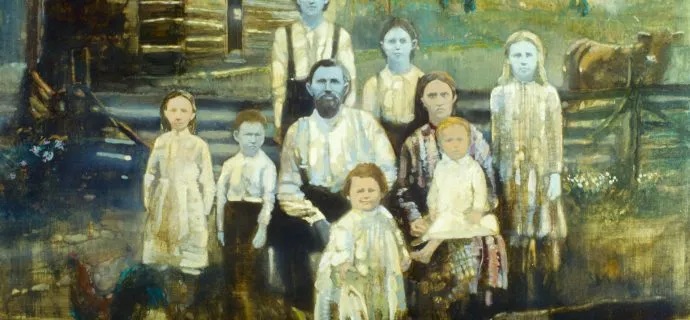
In the hills of eastern Kentucky, one family’s story grew into something almost unreal. For more than a century, the region carried quiet tales of men, women, and children who walked through remote valleys with skin that appeared sky tinted. They were known as the Fugates of Troublesome Creek. To many outsiders the idea sounded impossible, yet the story was not born from rumor. It grew from a rare genetic condition, a secluded environment, and a chain of events that can happen only in places where families stay isolated for a long time.
The tale of the Blue Fugates begins in the early nineteenth century. At that time the Appalachian frontier was still carved by narrow ridgelines and slow travel. Roads were rough, and many small settlements could be reached only by horse or by foot. It was in this world that a French-born man named Martin Fugate settled near the banks of Troublesome Creek in Kentucky. He was said to have pale skin and dark hair, and some accounts claim that he carried a trait that was invisible at the time. His wife, Elizabeth Smith, came from a family that had lived in the area for years. She, too, unknowingly carried the same genetic trait. Their shared history would lead to one of the most unusual medical cases in American records.
The couple raised several children, and the local community soon noticed that some of them were different. One child in particular was born with blue skin. Not pale. Not gray. Blue. In the earliest days of the family’s history, neighbors had little explanation beyond simple observation. Some believed the children were ill. Others assumed the odd color came from the cold mountain mornings or from poor circulation. In a time when few people in the region had access to trained physicians, such guesses were common. Yet the children lived normal lives and did not show signs of pain or distress. Their condition seemed permanent but not harmful. Within their own home and community the blue skin became something accepted rather than feared.
To understand why the Fugates looked the way they did, one must understand the place in which they lived. Eastern Kentucky was, for generations, a region that moved at a slow pace. Families often stayed near each other. Marriages happened within the same community or even the same extended family. In many cases there were few choices. Travel out of the mountains took time and energy. Travel into the mountains was just as difficult. While this way of life created strong family bonds, it also meant that certain genetic traits could repeat themselves.
The genetic condition that shaped the Fugates is called methemoglobinemia. It affects the blood’s ability to carry oxygen. Normally, the hemoglobin inside red blood cells holds onto oxygen and moves it through the body. In this rare condition, hemoglobin changes into a form called methemoglobin. This version cannot carry oxygen properly. As a result, the blood takes on a darker color and the skin appears blue. The condition can be inherited when both parents carry the same recessive gene. In most communities these genes do not meet often. In small, isolated valleys, however, the possibility increases.
As the years passed, the Fugate family grew. Each generation married neighbors or distant cousins. Each new child carried a mixture of chance and genetics. Some were born with clear skin. Some carried the gene but never showed symptoms. Others inherited two copies of the gene and had skin that ranged from light lavender to a deep sky shade. The blue hue varied depending on the individual, the temperature, and the level of methemoglobin in the blood at any given time.
By the late nineteenth and early twentieth centuries, the Fugates’ reputation spread quietly beyond their county. Travelers who passed through the mountains sometimes heard the story and often repeated it with a tone of disbelief. A family with blue skin seemed too strange to accept. Still, in the region itself, the family continued to live normal lives. They worked their land, raised livestock, farmed, hunted, attended church gatherings, and took part in community events. Their difference marked them in appearance but not in their roles within local society.
The first major medical attention came in the mid twentieth century, when reports of the family reached researchers and physicians in Kentucky. One of the most important figures in understanding the condition was Dr Madison Cawein, a hematologist at the University of Kentucky. In the 1960s he began following stories about the blue-skinned residents of Troublesome Creek. His curiosity led him into the mountains, where he met several members of the Fugate family. They were cautious at first. Outsiders were not always trusted, and many families in the region preferred to keep private matters within their own communities.
Dr Cawein, however, approached the family with respect and directness. He listened to their history and watched how they interacted with one another. He noticed that many blue-skinned family members breathed normally, worked normally, and did not appear weak. They were not sick in the way outsiders had imagined. Instead, the problem rested inside the structure of their blood. After several examinations he recognized the signature of methemoglobinemia, a condition so rare that few physicians had ever seen it firsthand.
What made the condition particularly interesting to Dr Cawein was its origin. Most cases of methemoglobinemia come from exposure to certain chemicals or drugs. In the Fugates, however, the condition was inherited. It came from a genetic mutation that had passed silently through generations. When two carriers of the gene married, the chance of having a blue-skinned child increased significantly. In a small mountain community with few new families entering from outside, those chances grew higher over time.
Dr Cawein tested treatments to see how the condition could be reversed. He found that methylene blue, a simple chemical compound, could temporarily restore normal skin color. When the compound entered the bloodstream it helped convert methemoglobin back into hemoglobin. For many members of the Fugate family, the effect was immediate. Skin that had been blue for years shifted toward a normal tone. The change astonished both the doctor and the family members who experienced it. Although the treatment was temporary, it demonstrated the underlying science behind the condition and offered relief for those who wished to reduce the visible effect.
Not everyone in the family wanted treatment. Some accepted their appearance as part of who they were. Others wished to avoid attention. In a region where privacy mattered, the idea of seeking medical care for a cosmetic change seemed unnecessary. Life in the mountains carried its own rhythm and expectations, and the family remained deeply tied to it.
As transportation improved throughout the twentieth century, movement in and out of the region increased. Young people left for education or employment. New families moved into towns that once seemed unreachable. Over time, the likelihood of two carriers of the rare gene marrying became smaller. The condition faded naturally as the population mixed with others. By the end of the century, only a few documented cases of blue-skinned descendants remained.
The story of the Fugates, however, did not disappear. It attracted researchers who wanted to understand genetic inheritance. It interested writers and historians who looked for stories that reflect the hidden complexity of rural America. Their history also shaped broader conversations about isolation and health. What happened in Troublesome Creek showed how easily rare conditions can grow inside small communities and how those communities adapt to differences.
For many readers today, the idea of a family with blue skin still feels like a piece of folklore. Yet the Fugates were real people who lived ordinary lives. They tended fields, walked through mountain paths, and raised their children with the same concerns shared by families everywhere. Their condition did not give them special abilities or unusual weaknesses. It simply made them look different.
The medical explanation behind their color helps separate their story from myth. It illustrates how subtle changes in blood chemistry can alter physical appearance. More important, it highlights how genetics can shape families in unexpected ways. When two carriers of a rare gene meet in a small community, the effects can last for generations. The Fugates’ story is not only about their unusual appearance. It is also about the way their community lived, loved, and continued despite the curiosity of the outside world.
Today the tale of the Blue Fugates holds a unique place in American history. It blends science, geography, and family heritage. It reminds readers that the human body holds countless variations, many of which remain hidden until the right conditions bring them forward. In the hills of Kentucky, those conditions aligned within one family for more than a century. Their legacy remains a point of study, a subject of fascination, and a reminder of the rich stories that can emerge from even the most isolated places.


 Funks Swabbie