 Funks Swabbie
In northeastern Siberia, far from Russia’s major capitals and separated from the rest of the world by long stretches of frozen wilderness, stands a city shaped by a climate unlike any other. Yakutsk, the capital of the Sakha Republic, is often described as the coldest city on the planet. Temperatures can fall to levels difficult for the human body to imagine, much less endure. Yet more than three hundred thousand people call this place home. They study, work, raise families, and build their lives in a region where winter dominates the calendar and cold dictates nearly every decision.
Understanding Yakutsk means beginning with the environment itself. The city rests on permafrost, settled along the Lena River in a wide valley surrounded by low mountains and vast taiga. The land remembers every winter that has passed, holding the cold deep within its soil. This simple detail shapes nearly everything about the city’s architecture, economy, and daily rhythms. Nothing melts beneath Yakutsk, and nothing ever truly thaws. Life here continues because people learn to live with the cold rather than resist it.
A City Built on Frozen Ground
The coldest city in the world sits on land that behaves more like stone than soil. Permafrost is a mixture of dirt, sand, gravel, and ancient ice that has remained frozen for thousands of years. Since heat can weaken or destabilize this layer, Yakutsk cannot rely on conventional building methods. Instead, homes stand on concrete piles driven deep into the earth, raising entire structures above ground level so that warmth from the building will not melt the ice below.
Walking through Yakutsk reveals rows of buildings lifted several feet off the ground. The air circulates beneath them year-round. Every pipe, cable, and foundation must respect the fragile balance between structure and environment. This form of construction gives the city a distinctive appearance. It also reflects how people in the region have long adapted to their surroundings. The environment cannot be forced to change, so human ingenuity adjusts instead.
The city lies nearly three hundred miles south of the Arctic Circle, close enough to experience the same winter darkness and bitter winds that sweep across the far north, but far enough to enjoy a brief summer that brings green grass, warm air, and long hours of sunlight. This short season is celebrated every year. For a few weeks, the frozen landscape softens and life feels almost ordinary. Then the cold returns and remains for most of the year.
Temperatures That Redefine Cold
It is difficult to understand Yakutsk’s climate through numbers alone, yet the figures tell part of the story. In January, the average low temperature reaches around minus 42 degrees Celsius. During severe winters, the mercury falls much lower. Some districts in the region have recorded temperatures nearing minus 65 degrees Celsius. Residents remember days when the air felt so sharp and dry that inhaling too deeply caused pain in the chest. Frost forms instantly on scarves and coats. The air freezes around eyelashes. A short walk can become dangerous if clothing is not layered properly.
In 2018, the winter grew so intense that people reported their eyelashes freezing almost immediately after stepping outside. Photos circulated around the world showing pedestrians surrounded by swirling ice crystals, their breath forming clouds that lingered in the still air. The cold shuts down electronics, damages exposed skin, and makes simple tasks more difficult. Universities issued advisories asking students to avoid long walks, and even long-time residents limited their time outdoors.
Light too becomes a rare commodity. Winter days are short, with a few hours of pale sunlight and extended periods of blue twilight. For weeks at a time, the city wakes in darkness and ends the day in the same dimness. Daily life must proceed regardless. Schools remain open, businesses operate, and traffic continues to move through streets lined with frost. The city has learned to function under these conditions, and residents follow the unwritten rules that make life safer.
A People Shaped by the Land
Yakutsk’s population includes people from many parts of Russia, but the region’s cultural heart belongs to the Yakuts, or Sakha. Their history extends deep into Siberia’s past. Their traditions, language, and customs remain central to the city’s identity. The Sakha language is widely spoken, especially in homes and local communities. Russian is used in government, business, and education, but the Sakha language survives in conversation, folk songs, and stories passed down from older generations.
Families in Yakutsk often blend modern routines with customs rooted in the region’s past. This includes seasonal festivals, traditional clothing made from reindeer hides and fur, and local dishes that developed from the land’s limited resources. Culture has always adapted to climate, and nowhere is this more evident than in Yakutia.
Preparing for Winter
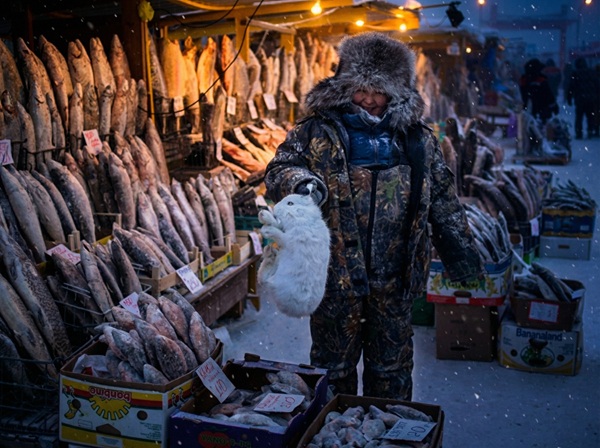
Surviving the coldest city on Earth requires preparation. Clothing serves the first line of defense. Residents wear several layers of wool, cotton, and fur to retain heat. Coats made from reindeer, fox, or sable fur are common during the coldest months, not only for tradition but for practicality. Boots are lined with warm materials and worn with thick socks. Gloves often cover smaller gloves. Scarves shield the face and neck from biting winds. Hats cover the head and ears completely. It is not unusual for a person to spend several minutes dressing before stepping outdoors.
Cars require special handling. Batteries weaken quickly in extreme temperatures, and vehicle fluids thicken. Many drivers keep engines running for long periods to prevent freezing. Others store cars in heated garages. Public transportation remains active through winter, but even buses face mechanical challenges. In some cases, walking becomes faster and more reliable, though only for short distances and only with proper clothing.
Homes are built with heavy insulation. Triple-layer windows and thick walls help prevent heat loss. Heating systems run continuously. Residents understand that the boundary between safety and danger depends on proper indoor warmth. Electricity costs are high, but necessity guides these choices.
A City That Refuses to Slow Down
Despite the harsh climate, Yakutsk functions as a modern urban center. Schools, universities, theaters, shops, and restaurants operate year-round. Students attend classes even during deep winter, although schools monitor weather conditions closely and may shorten outdoor activities. Food markets stock both local and imported items. Offices remain open. Families gather for events, meals, and holidays.
The summer months offer relief from the cold and an opportunity for outdoor activities. Temperatures can rise as high as 30 degrees Celsius. Green foliage appears, gardens grow, and the Lena River becomes a place for fishing and recreation. This brief transformation is cherished by residents who endure long winters.
Yakutsk also maintains an active arts and cultural scene. The region has a thriving film industry and hosts festivals celebrating music, dance, and folklore. Many performances incorporate elements of traditional Sakha culture, blending ancient practices with contemporary interpretation.
Food That Reflects the Climate
The dishes found in Yakutsk originate from the land’s limited resources. Meat and fish form the foundation of local cuisine. Fresh vegetables can be expensive due to transportation costs, so meals rely heavily on protein and preserved food.
Some well-known dishes include:
Stroganina
Thin slices of frozen fish served raw. The cold climate makes this dish possible. It is eaten fresh, often with salt or spices.
Chochur
A meat pie filled with reindeer or horse meat. It is hearty, filling, and suited for long winters.
Indigirka salad
A combination of diced frozen fish, onions, and seasoning. Simple ingredients create a distinct flavor.
Koumiss
A fermented drink made from mare’s milk. It is consumed on special occasions and holds cultural significance.
During summer, berries such as cloudberries and cranberries are gathered and preserved. These fruits provide valuable nutrients during the colder months. Hunting and fishing remain part of life in rural areas, though many residents also rely on imported goods transported by air or through long supply routes.
A Constant Struggle with Climate Change
Although Yakutsk is built to endure cold, it now faces a new challenge. Rising global temperatures threaten the stability of the permafrost foundation. When permafrost warms, it begins to weaken. Buildings shift. Roads crack. Pipelines bend. Infrastructure that once stood firmly becomes vulnerable.
Scientists warn that melting permafrost releases methane, which contributes to further warming. The cycle is difficult to manage and has already begun to affect regions across Siberia. Residents notice changes in weather patterns and shifts in seasonal timing. What once felt predictable now seems uncertain.
For Yakutsk, climate change presents both environmental and economic risks. Industries such as mining rely on stable land conditions. Roads and buildings require costly repairs. Local authorities monitor the situation closely, but the long-term impact remains unknown.
Why People Stay
Visitors often wonder why so many people live in such a harsh environment. The answer varies from family to family, but a sense of identity plays a major role. Yakutsk is home. It holds history, culture, and memory. The cold shapes daily life but also shapes character. Generations have grown up in this climate and understand its rhythms.
The region’s natural beauty inspires loyalty as well. Winter skies display bright stars and, at times, colorful auroras. Summer brings long days and a green landscape that feels almost unreal after months of frost. The Lena River provides breathtaking views throughout the year.
Work opportunities also keep people in Yakutsk. The region is rich in natural resources, particularly diamonds and coal. Mining remains a major employer. Education, healthcare, government administration, and scientific research also offer stable careers.
Strength in Everyday Life
To live in Yakutsk is to accept challenge as part of existence. The cold becomes a constant companion. Decisions are shaped by temperature. Clothing becomes essential equipment. Weather forecasts guide planning. Yet life continues without hesitation. Children walk to school. Workers commute. Markets open. Families gather for meals. The city moves at a steady pace, guided by resilience and routine.
Many residents take pride in their ability to withstand conditions that would overwhelm most people. This pride is not boastful. It is quiet and steady, rooted in a recognition that living here requires persistence and cooperation.
The city proves that human communities can adapt to environments that seem uninhabitable. This idea gives Yakutsk a unique place in the modern world. Its people remind us that survival is not merely endurance. It is the practice of building a home wherever we choose to stand.
The Legacy of the Coldest City
Yakutsk holds a rare distinction. It is a city that modern life has not softened. Its climate remains as severe as nature can offer, and its streets reflect a long history of human adaptation. The cold governs everything from architecture to culture. And yet the city thrives.
The people who live here are shaped by their environment, but they also shape the city’s future. Through innovation, tradition, and determination, they maintain a community on land that remains frozen throughout the year. Their story illustrates the limits of human resilience and the power of cultural continuity.
Yakutsk is not simply the coldest city on Earth. It is a place where cold becomes part of identity, where survival is a skill passed down through generations, and where life continues despite conditions most would consider impossible.


 Funks Swabbie