 Funks Swabbie
This is the fascinating story of Clive Wearing, a British musician whose rare neurological illness left him unable to hold a new memory for more than half a minute. His story is often described as one of the most severe cases of amnesia ever recorded. Scientists, caregivers, and readers across the world continue to study his experience, not only because of its medical significance, but also because it raises questions about love, selfhood, and what remains when memory disappears.
In this article, we will highlight Clive Wearing’s life before illness, the events that led to his condition, the extraordinary impact of his memory loss, and the unusual ways he has managed to continue living.
A Life Centered on Music
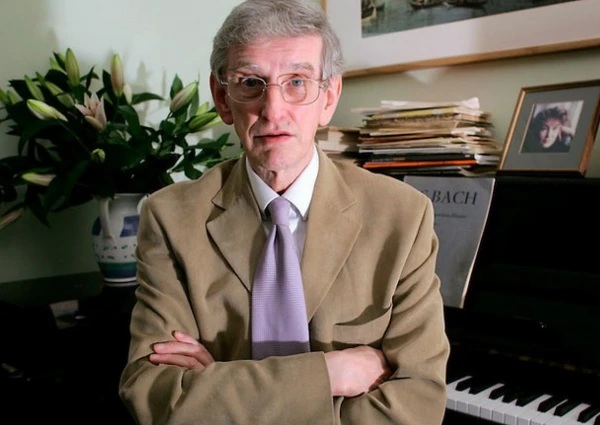
Before illness changed the rhythm of his world, Clive Wearing was known for his talent. Born in 1938, he grew up fascinated by the structure and beauty of classical music. He studied at the University of Cambridge and built a respected career as a conductor, tenor, and musicologist. Throughout the 1960s and 1970s, he directed choirs, worked with leading ensembles, and earned a reputation for precision and passion.
Those who knew him then recall his sharp intellect and quick humor. He could interpret complex compositions with ease and communicate their meaning to musicians with clarity. His life followed a steady routine of teaching, performing, researching, and writing. By the early 1980s, he was well established in his field, admired for both talent and scholarship.
Nothing in his work or behavior suggested the sudden disruption that waited ahead. No one could have predicted how rapidly his secure world would collapse.
The Sudden Attack on His Brain
In 1985, Clive developed a headache and fever. At first it appeared to be a common infection. Within days, however, he grew severely ill. Doctors soon identified the cause as herpes simplex encephalitis, a rare condition in which a common virus reaches the brain and attacks its tissues. Without quick treatment, the virus can destroy essential structures responsible for memory, awareness, and coordination.
The illness moved fast. It caused swelling in parts of Clive’s brain, especially the hippocampus, the region known for forming and storing memories. By the time doctors controlled the infection, irreversible damage had already taken place.
Clive survived, but the cost was enormous. He could no longer form new memories, and many of his old memories had faded or vanished. From that point forward, his mind reset every few seconds. Each waking moment felt like the first, and any event quickly slipped out of reach.
His wife Deborah later described visiting him soon after his diagnosis. When she stepped out of the room and returned a moment later, he greeted her with joy, convinced he had not seen her in years. His notebook entries from that period reveal the confusion that marked his days. Each time he awoke or regained awareness, he wrote that he was now “truly awake,” crossing out earlier entries that he believed were incorrect.
The illness had shattered the timeline of his life. He could remember little of his past and nothing of his present. Yet he was still alive inside the limits of a memory that lasted less than half a minute.
Life Inside a Thirty-Second Window
Doctors describe Clive’s condition as an extreme form of anterograde amnesia. This means he cannot form new lasting memories. He also suffers from retrograde amnesia, which affects his ability to recall events before the illness. Together, these conditions isolate him in a narrow span of awareness.
He often forgets where he is or why he is there. He recognizes few people. He may greet the same person repeatedly with the excitement of a long-awaited reunion. If he sits alone, confusion quickly returns as the memory of the previous minute dissolves.
His experience is not constant distress, but it keeps him in a repeating pattern. He has said that he feels as though he is waking from a long period of unconsciousness. Each moment seems bright and immediate, as if the world has suddenly returned after an absence he cannot measure.
Yet amid the confusion, a few parts of his identity survived. Most important is his ability to play and conduct music. When placed at a keyboard, he performs pieces that his conscious memory can no longer recall. His procedural memory, the part of the brain responsible for learned skills, remains strong. In these moments, the man he once was becomes clear again.
Love That Endured the Loss of Memory
Among the striking features of Clive’s story is his relationship with his wife, Deborah. They had been married only a short time before the illness struck. Afterward, she became one of the few people he continued to recognize.
Even though he forgets her visits within moments, his emotional response to her remains constant. When she enters the room, he often greets her with deep affection, as if reunited after a long separation. Scientists studying him have noted that emotional memory can survive even when factual memory does not.
Their marriage faced challenges. The strain of constant care, repetition, and emotional loss weighed heavily on Deborah. At one point she stepped back from the role of daily caregiver to protect her well-being, though she continued to visit him and later wrote a memoir describing their experiences. Her book brought wider attention to Clive’s condition and helped the public understand the human side of neurological illness.
Their bond shows how relationships can continue even when memory fades. The connection between them appears rooted in emotional recognition rather than recalled experiences. This insight has influenced modern studies on how the brain stores feelings separately from facts.
Daily Life Under Continuous Forgetting
Clive’s days follow a gentle routine designed to reduce confusion. Caregivers guide him through meals, music, rest, and simple activities. His home is arranged to minimize disorientation and prevent accidents. Notes and reminders help him understand his surroundings, though he forgets them soon after reading.
Despite these challenges, he shows intelligence and humor in conversations, though he cannot remember them afterward. He sometimes expresses frustration about not knowing what has happened. He may ask the same question many times because each answer fades before he can hold on to it.
Yet his musical ability remains a gift. Whether singing with a choir or playing the piano, he connects to rhythms and patterns that existed long before illness re-shaped his life. Caregivers often use music to soothe him or help him concentrate. During these moments, the boundary created by memory loss seems to soften.
His preserved musical memory continues to interest scientists. It indicates that the brain stores different types of memory in separate systems. The illness destroyed his ability to form new episodic memories, but it left procedural memory largely intact. This discovery has supported new treatment methods for individuals with similar conditions.
Scientific Contributions and Lasting Impact
Though Clive never intended to become a central figure in neurological research, his condition has taught experts a great deal. His experience confirmed theories about how the hippocampus organizes memory and how other parts of the brain support learned skills. Researchers have used his case to study the separation between emotional memory and factual memory, providing evidence that the brain can preserve deep feelings even when conscious recall is lost.
He has appeared in documentary studies, academic reports, and public discussions about brain health. His story has helped families understand relatives with Alzheimer’s disease, traumatic memory loss, or similar conditions. It has also encouraged conversations about empathy in caregiving, the limits of medical science, and the resilience of the human spirit.
Although Clive himself cannot follow these discussions or recall the attention his story has received, his life continues to guide research that benefits others.
The Nature of Identity Without Memory
One of the central questions raised by Clive’s condition is what remains of a person when memory disappears. Without past experiences, can identity endure? Scientists and philosophers have long debated this issue, and his case provides a real example.
In many ways, Clive’s identity survives through his emotional responses. He recognizes love, music, and familiar voices. His personality remains visible in his reactions, preferences, and expressions. Though he cannot describe his past, traces of the man he once was continue to shape the man he is now.
His experience also proves that memory does not define the whole self. Human beings consist of habits, emotions, instincts, talents, and values that operate even when conscious memory fails. These deeper structures allow him to function and maintain connections despite the narrow limits of his awareness.
Today, Clive lives under dedicated care, supported by routines that bring calm and comfort. His memory remains confined to short moments, yet each moment is full of feeling and response. He may not remember the events of his life, but he experiences each day with sincerity.
His story encourages a clearer appreciation for memory and its role in human life. It also reveals how the mind adapts, how relationships endure, and how the human spirit finds meaning even in the smallest fragments of time.
Clive Wearing may forget his world every few seconds, but the world has not forgotten him. Through his resilience, his surviving talents, and the lessons drawn from his condition, his life continues to shape scientific understanding and human compassion.


 Funks Swabbie