 Funks Swabbie
This is the story of how one man survived after being lost at sea for over 1 year. It all started on a fog-gray morning off the coast of Mexico in November 2012 after his small fishing boat slipped quietly through the water. On board were two men: a Salvadoran fisherman named José Salvador Alvarenga, and his young crewmate, Ezequiel Córdoba. The job was supposed to be a brief fishing trip; instead, it became the opening chapter of the most extraordinary survival tale of modern times. For 438 days—over fourteen months—Alvarenga would drift across the Pacific, with no land in sight, no radio contact, no rescue, and almost nothing but his wits, whatever food he could catch, and a will to survive.
When he finally washed ashore on a remote islet in the Marshall Islands on January 30, 2014, the world could scarcely believe the ragged, wild-haired man who staggered onto land. The journey of his survival—real, brutal, sometimes horrifying—challenges everything we imagine about human endurance. His story is more than survival. It is a testament to desperation, resilience, guilt, regret, and the fragile line between hope and madness.
From a Routine Fishing Trip to a Nightmare
Alvarenga knew the sea. He had worked as a fisherman. On November 17, 2012, along with Córdoba, he set out from Mexico on what was intended as a short fishing expedition. The kind that promised sharks, marlins, and sailfish—easy prey for an experienced hand.
But just two days in, a savage storm struck the coast. The waves tossed their small boat mercilessly. The engine died, the vessel started to take on water, and the current began dragging them further from shore. Their radios and any delicate electronics failed. Within hours, the trawl turned into a nightmare: they were helpless, adrift, without navigation, without power, at the mercy of the open ocean.
With no rescue in sight, the boat turned into a coffin on water. It was at that moment that Alvarenga’s instincts—and sheer will to survive—would be tested beyond any normal human limit.
Surviving the Impossible: Food, Water, Madness
In the early days, hunger and thirst gnawed at them. After the storm, their supply of drinking water ran out within days. Dehydration seemed certain. According to Alvarenga, both men resorted to drinking their own urine; only later, when rain came, did they collect fresh water.
Food was even harder to come by. In the vast, empty Pacific, fish were scarce. So they turned to more desperate sources: seabirds, sea turtles, raw fish, and occasionally sharks. When they caught birds, sometimes they drank their blood. When one of them couldn’t eat anymore—or fell ill—hunger turned merciless.
Córdoba eventually became sick—according to Alvarenga, possibly after eating a bird that had swallowed a poisonous sea snake. His health deteriorated steadily until he died around ten weeks into the ordeal.
Alvarenga’s solitude then became absolute. Grief, guilt, despair and isolation gnawed at his mind. He said he began hallucinating, talking to Córdoba’s corpse. He kept the body aboard for days—drawn by memory, trembling guilt, fear of silence. Eventually the weight of it became too much. He wrapped the body in tarp and gave it to the sea.
Some nights, he considered surrendering to the sharks circling the boat. But he kept going. He crafted crude fishing gear from boat parts, improvised shelter on deck to avoid the merciless sun, scavenged anything edible, and counted days by the phases of the moon.
He refused suicide. He clung to a single thought: “You only get one chance to live.”
Drifting into the Unknown: Distance, Loss, Hope
Day after day, Alvarenga drifted westward. No islands appeared. No ships rescued him. The ocean stretched endlessly. He watched container ships sail past. On at least one occasion, he signalled to a ship—but the vessel merely waved and slipped away, oblivious to his fate.
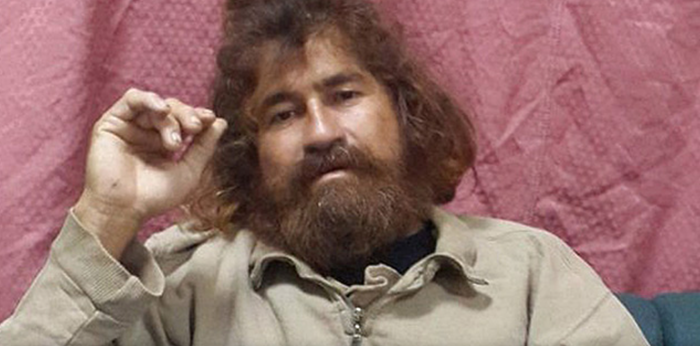
Over time his body changed. When he was found, rescuers described him as a man barely human: matted hair like a wild shrub, beard curly like tangled vines, swollen ankles, wasted limbs, jaundiced skin. He could hardly walk. He had no idea how far he had drifted. Some estimates place the distance at around 6,700 miles.
Yet inside him burned a fragile thread of hope, a belief that as long as he stayed alive, as long as he didn’t give up, he had a chance. It was this belief that would save him when the ocean finally spat him back toward land.
Rescue on a Remote Island: The Day the Sea Let Him Go
On January 30, 2014, a dishevelled figure crawled out of the surf on a small islet belonging to the Marshall Islands. That man was José Salvador Alvarenga. Local islanders discovered him, naked, delirious, beyond weak. They rescued him. Within hours, the tiny atoll mobilized. Police, medical staff, and aid came. They were stunned by the survivor’s condition.
He was taken to a hospital. The doctors diagnosed anemia. They suspected that his diet of raw turtles and birds may have brought parasites—a risk that haunted their initial treatment. He could barely speak. He barely recognized himself. Walking again was slow, painful. He refused to look at water. Sleep eluded him. The trauma of solitude, survival and loss lingered.
A few days later, the photos of him—bearded, ragged, yet alive—circulated worldwide. The resemblance was uncanny, uncanny enough that many compared him to the fictional castaway stranded in the ocean in the popular film starring a lone man struggling to survive. Suddenly, Alvarenga became a global symbol of survival against impossible odds.
Alvarenga’s return was not a triumphant homecoming. The world was fascinated, yet skeptical. Many doubted that a man could survive so long with so little. The story seemed unbelievable. Some called it myth.
To tell his story, Alvarenga worked with journalist Jonathan Franklin, whose book 438 Days: An Extraordinary True Story of Survival at Sea was published in 2015. The book is based on dozens of interviews—with Alvarenga himself, with rescue officials, with the islanders who saved him, and medical staff.
But the scars remained. He returned to El Salvador, but struggled with nightmares, fear, insomnia, and a lasting fear of water. The man who had lived on the ocean now feared it forever.
In 2015, the family of his former crewmate Córdoba filed a lawsuit demanding $1,000,000. They accused Alvarenga of cannibalism, suggesting he ate Córdoba to survive. Alvarenga and his lawyer denied the claim. There was no conclusive evidence that he had done so; Alvarenga maintained he buried the body at sea after days of torment.
Despite the lawsuit, despite lingering doubts, the world slowly came to accept his account. Over time, many recognized that if anything illustrates human willpower, despair, and the brutal power of nature—and how one man endured it—it is this story.


 Funks Swabbie