 Funks Swabbie
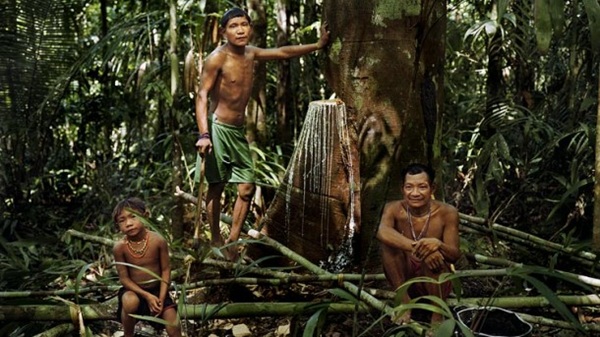
Visitors who enter the deep forests along the Maici River in the western Amazon often encounter a tribe that has no words for time or numbers. They are known as the Pirahã, a small tribe whose daily life follows a rhythm that confounds outsiders. This is not only because they live without many of the material objects other cultures consider essential. It is because the Pirahã speak a language that does not contain words for past or future. They have no terms for time. They have no words for numbers. They do not count. They do not tell stories about ancestors who lived generations earlier. They do not plan far ahead. Instead, they live in a world where the present occupies nearly all thought.
Anthropologists and linguists have spent years trying to piece together how a community could function without concepts that most people regard as fundamental. Their findings have fueled academic debates, challenged long-held theories about human cognition, and stirred curiosity among readers all over the world.
This article explores who the Pirahã are, how they live, and why their language continues to intrigue researchers.
People of the forest
The Pirahã live in a stretch of the Brazilian Amazon not far from the border between Amazonas and Rondônia. Their homes rest along the Maici River, a tributary that winds through thick forest and carries the sounds of insects, monkeys, and faraway thunder across the surface.
Life follows the river’s movement. Hunting, fishing, sleeping, gathering, socializing, and storytelling happen along its banks. There are no permanent houses of the kind many societies use. Instead, the Pirahã build simple shelters with palm leaves and wooden poles. These may last for days or weeks before being replaced. The ease with which they build and abandon homes reflects something deeper in their worldview. They do not tie themselves to possessions or structures that require long planning. They value flexibility and spontaneity. Their language supports it.
Visitors often remark on the sense of ease that floats through the village. No clocks. No calendars. No tall piles of stored food. People rise when they wish. They sleep in short rests rather than long uninterrupted nights. Small fires burn near the shelters. Children wander freely among adults. Conversations rise and fall throughout the day.
Rather than shaping their environment through complex tools or machines, the Pirahã adapt to the forest as it presents itself. Their knowledge of edible plants, seasonal shifts, animal tracks, and river currents is deep and precise. They do not measure these things in numbers. Their understanding is rooted in memory, attention, and practical experience.
The world of the Pirahã
Much of the world learned about the Pirahã through the work of Daniel Everett, an American linguist and former missionary who lived among them for many years beginning in the 1970s. Everett first arrived with the intention of translating the Bible into the Pirahã language. He soon realized the task was impossible in the way he had imagined. Pirahã culture does not include traditional narratives about distant ancestors, creation stories, prophecies, or moral tales handed down through generations. Their stories describe only events that someone alive has observed. Nothing else carries authority.
Everett also noticed something striking in the language itself. The Pirahã have no words that correspond to “one,” “two,” “three,” or any other number. There are no terms like “yesterday,” “tomorrow,” “next week,” or “last year.” Even words for colors are different from what outsiders expect. Instead of fixed color names, speakers describe objects using comparisons, such as light or dark.
Most languages of the world include grammar structures that help people talk about time. English uses verb tenses. Spanish employs multiple layers of past tenses. Mandarin expresses time through aspect markers. The Pirahã language does not follow this pattern. It contains ways to express whether something has been completed or is ongoing, but there is no structure to separate past from future through markers the way most languages do.
For the Pirahã, time is not a sequence of units to be measured and arranged. It is a flow of events that matter only when they can be directly witnessed. This does not mean they cannot remember. It means their culture does not value extended narratives that anchor identity in distant years.
Many researchers have asked how a society can survive without words for numbers. Yet the Pirahã function well within their environment. They gather food based on experience rather than measurement. They keep track of group needs by observation rather than tallying. When they trade with neighboring communities, they rely on equivalence by sight or mutual agreement rather than counting or weighing.
Attempts to teach the Pirahã how to count have not succeeded. Everett and others tried sharing simple lessons about numbers. The tribe listened politely and then returned to their usual ways. Learning numbers does not interest them. They see no practical reason to add the concepts to their daily life.
The Pirahã worldview has been described as immediate, direct, and rooted in personal experience. This does not imply that they lack imagination or creativity. Their songs, conversations, and stories fill the village each day. They mimic sounds from animals. They speak in tones that shift to indicate context or emotion. They sometimes hum or whistle entire sentences.
What sets them apart is their focus on what is real to someone living right now.
Many cultures build identity through memory and tradition. They tell long stories about ancestors, heroes, and origins. The Pirahã do not. When asked about ancestors from long ago, they simply say they do not know. If pressed, they explain that it does not matter. Life is concerned with what the speaker has seen.
This approach also shapes their relationship with death. When someone dies, the Pirahã mourn, but they do not preserve the memory through extended narratives. The past does not anchor the present. Life continues in the same cycle of fishing, hunting, and shared daily tasks.
This cultural pattern has led some researchers to suggest that the Pirahã operate with a unique cognitive framework. Others caution against drawing conclusions that make the tribe appear isolated from the complexity of human thought. What is clear is that their language and culture work together to reinforce a worldview centered on present experience.
How a World Without Numbers Functions
Many people wonder how a community can manage tasks that require measurements without numbers. The answer lies in the physical environment and the way the Pirahã interact with it.
The tribe does not store food in large quantities. They gather fruits, hunt animals, and fish according to need. Their environment provides resources in cycles that require attention and skill rather than calculation.
When fishing, they judge river conditions by observation. When climbing trees for fruit, they know which branches to trust by experience. Their knowledge does not depend on numbers. It depends on familiarity with the land.
From time to time, the Pirahã trade with neighboring groups. They might exchange baskets, fish, or forest products for goods such as metal tools or clothing. Instead of counting or weighing items, they compare relative value visually. The exchange is based on agreement rather than precise measurement.
Tools such as bows, arrows, and baskets are made through techniques passed from person to person. These skills do not require numerical instructions. They come from practice and observation.
Family and Social Structure
Families and friendships form naturally without counting or tracking ages. People do not celebrate birthdays. They do not keep records of births. When someone asks how old a person is, the Pirahã answer with a general sense of youth or age rather than a number.
Their sense of direction is strong. They know how to navigate rivers and forest paths through memory and landmarks rather than measured distance. Their awareness of time comes from the position of the sun, the presence of insects, the behavior of birds, and the rhythm of the day.
In this context, numbers and clocks become unnecessary. The environment itself provides cues that guide action.
The Pirahã have sparked significant debate among linguists, psychologists, and anthropologists. The central question is whether their lack of number words and time markers limits certain cognitive abilities, or whether those abilities simply take a different form.
Some researchers argue that language influences thought. If a language does not contain certain concepts, those concepts may be harder to form. Others suggest that humans can think beyond the boundaries of language, even if they do not express the ideas verbally.
Studies have attempted to test Pirahã adults using tasks that involve matching quantities. Participants can match small sets through one-to-one comparison, but they struggle with tasks that require remembering or manipulating larger quantities. Critics argue that these tests do not capture the skills that matter in the Pirahã lifestyle. Supporters claim the results reflect genuine differences in cognitive processing.
The discussion remains lively. What is clear is that the Pirahã demonstrate that human societies can thrive under mental frameworks that differ sharply from those used in industrialized nations.
Encounters With Outsiders
Missionaries, traders, anthropologists, and government workers have all made contact with the Pirahã at different times. These interactions often reveal the limits of translating concepts between cultures.
When missionaries attempted to introduce religious stories, the Pirahã asked whether the storyteller had witnessed the events personally. If not, the stories held no meaning and could not be taught. This made conversion efforts difficult.
In other cases, government workers tried to introduce agricultural programs based on measured planting cycles. The Pirahã had little interest. Their way of life does not rely on farming. It relies on the forest’s natural patterns.
Visitors sometimes misinterpret Pirahã behavior as simple or childlike because they do not use numbers. Yet the skill required to survive in their environment is substantial. They know animal patterns, plant cycles, fishing methods, and forest dangers with precision. Their knowledge is local and deep.
The Pirahã remain a small group, and their survival depends on the health of the Amazon rainforest. Deforestation, river pollution, and growing pressures from outside communities pose risks.
Despite these challenges, the Pirahã show little interest in changing their worldview. They continue to live as their ancestors did, not out of romantic simplicity but because their lifestyle suits their environment and their values.
Their unique way of thinking provides a reminder that many assumptions about human nature are shaped by culture rather than biology. Concepts like time and numbers may feel universal, but they are learned through experience. The Pirahã demonstrate that there are many ways to understand the world.
They live without clocks, but they are never late. They live without numbers, but they do not lack awareness. They live without stories from distant centuries, yet their daily lives remain rich with meaning drawn from what they see, hear, and feel.
In a world often dominated by schedules, deadlines, budgets, and long-term planning, the Pirahã offer a perspective that values presence over anticipation. Their culture challenges readers to consider how much of life is spent calculating and remembering rather than observing and living.
The Pirahã stand as one of the most intriguing communities in the Amazon. Their language and worldview offer a rare look at how human societies can shape themselves around the immediate moment rather than measured units of time or number.
For those who seek to understand the full range of human thought, the Pirahã do not represent an exception. They represent a reminder that the human mind adapts to many forms. Their life along the Maici River continues to show that the present can be enough

 Funks Swabbie