 Funks Swabbie
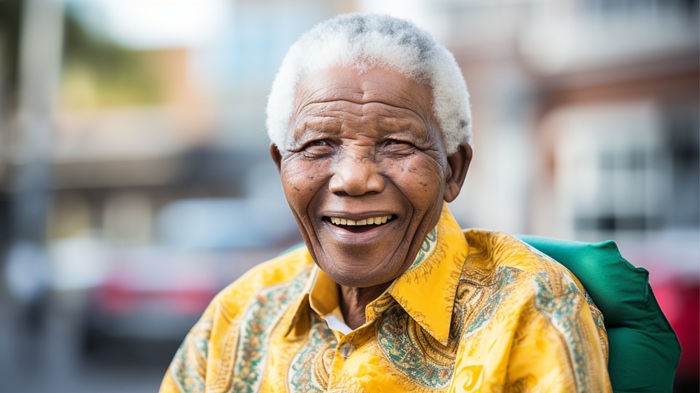
When 71-year-old Nelson Rolihlahla Mandela walked out of Victor Verster Prison in February 1990, the world saw an elderly man with a steady step and a soft smile. What the world could not fully see was the weight he carried. Behind that quiet presence stood twenty-seven years of confinement, the fading scars of hard labour, and the memory of a country divided by one of the most rigid racial systems in modern history. He had entered prison as a young man ready to challenge a government. He emerged as a patient statesman prepared to guide a fractured nation toward a future it had never known.
Mandela’s childhood in the rural Transkei did not hint at the scale of his future influence. He was born into a Thembu royal lineage yet spent his early years herding cattle, attending a small mission school, and observing the orderly routines of village life. When he moved to Johannesburg in his twenties, he saw firsthand the harsh realities imposed on Black South Africans. It was there that he joined the African National Congress and began the work that would define him. The years that followed were marked by political organizing, legal battles, protests, and a rising determination to oppose apartheid.
His arrest in 1962 set the path that would redirect his life. What began as a charge for leaving the country without permission soon widened into the Rivonia Trial, where Mandela and several colleagues stood accused of sabotage. The trial had the attention of the entire world. Many expected harsh punishment, though some feared the court would demand a sentence even more severe than life imprisonment. Mandela used the moment to defend not only himself but the principles he believed in. His closing address, which lasted several hours, spoke of his vision of a democratic and equal society in South Africa. He ended by saying the ideal was something for which he was prepared to die.
He was sentenced to life in prison. The door of his cell on Robben Island closed behind him when he was forty-six years old.
Life on the island tested the stamina of every prisoner. Days were spent breaking stones in the prison yard. Nights were spent in narrow cells with thin blankets and limited comforts. Letters were restricted. Visits were rare. Guards enforced the rules with precision. Mandela, however, set a tone that soon influenced those around him. He encouraged routine. He encouraged learning. He encouraged unity. He studied law, mentored younger prisoners, and called for discipline even in small tasks. Over the years he formed relationships with warders who respected his conduct, though he never allowed familiarity to cloud his purpose.
The prison years became a long education in patience. He learned to negotiate. He learned to listen. He learned the limits of anger and the value of restraint. Time moved slowly, yet the country beyond the island changed. Protests grew. International pressure increased. The government that had once felt immovable began to sense its own isolation.
By the late 1980s, secret talks between Mandela and government officials took place inside the prison walls. These conversations, often held in quiet rooms away from other inmates, were the first signs that the country was moving toward reform. The apartheid state could no longer withstand global criticism and internal unrest. Mandela, though still confined, became central to the transition.
His release on 11 February 1990 was broadcast around the world. Thousands lined the streets as he walked hand in hand with his wife, Winnie. People cried. People sang. People danced. The joy was genuine, yet the challenges ahead were enormous. South Africa was a country strained by violence, mistrust, and uncertainty. It needed calm leadership and a vision that could appeal to all its communities.
Mandela began travelling across the country soon after his release. He visited rural settlements, large cities, churches, factories, union offices, and community halls. He spoke of reconciliation. He spoke of shared nationhood. He spoke of peace, though he did not ignore the realities of injustice. His speeches were measured, firm, and rooted in the belief that dialogue was the only path toward a stable future.
The early 1990s were marked by negotiations between the African National Congress and the government led by F. W. de Klerk. The talks were complex and often tense. Violence erupted in several regions. There were disagreements within each political side. Mandela sometimes faced criticism from those who thought he compromised too easily. Others believed he demanded too much. Through these debates he maintained a steady approach. He believed that compromise, when guided by principles, could lead to a peaceful outcome.
South Africa’s first democratic election took place in April 1994. Lines stretched for miles as citizens voted freely for the first time in the country’s history. Mandela won the presidency with overwhelming support. His inauguration in Pretoria a few days later was attended by leaders from around the world. The moment marked the end of apartheid and the beginning of a new era.
The presidency brought many challenges. The country needed a new constitution that protected the rights of all its people. It needed economic reform to address long standing inequalities. It needed stability after decades of conflict. Mandela approached these tasks with the same patience he had developed in prison. He formed a government of national unity, including members from parties that had once opposed him. He encouraged open discussion about the country’s past and supported the Truth and Reconciliation Commission, which allowed victims and perpetrators to speak publicly about crimes committed under apartheid.
His years in office set foundations that influenced South Africa long after his retirement. He promoted education, community development, and cooperation across racial lines. He supported initiatives focused on housing, healthcare, and rural development. He also became a voice for peace beyond his country’s borders, supporting international efforts to address conflict in Africa and elsewhere.
Mandela stepped down in 1999 after one term, believing leadership should be renewed rather than held indefinitely. His post-presidency years were dedicated to humanitarian work, including campaigns against HIV and AIDS and support for children’s welfare. Though his public appearances gradually reduced due to age and illness, his role as a moral figure remained strong.
When he died in December 2013, tributes came from every corner of the world. His life had moved through remarkable stages: student, lawyer, activist, prisoner, negotiator, president, and elder statesman. His long journey showed that personal endurance can influence national change. It also showed that leadership rooted in patience and fairness can help a divided country find its way forward.
Mandela’s story continues to inspire people across generations. His rise from a prison cell to the presidency remains one of the most striking examples of how character can guide history. The nation he helped rebuild still faces challenges, yet the foundations he laid remind South Africans of what is possible when unity is chosen over bitterness. His legacy stands not only in the laws and institutions he shaped but in the belief that reconciliation can bring strength to a country once torn apart.
His life is often described as extraordinary, though he viewed it with modesty. He once said that he was not a saint but a sinner who kept trying. That sense of humility shaped the man who walked out of prison and offered his hand to those who had once opposed him. It shaped the president who chose dialogue instead of revenge. It shaped the citizen who retired quietly and allowed a younger generation to step forward.
From prisoner to president, Mandela’s path remains a reminder that forgiveness can hold greater power than punishment and that leadership grounded in integrity can help a nation rediscover itself.


 Funks Swabbie